
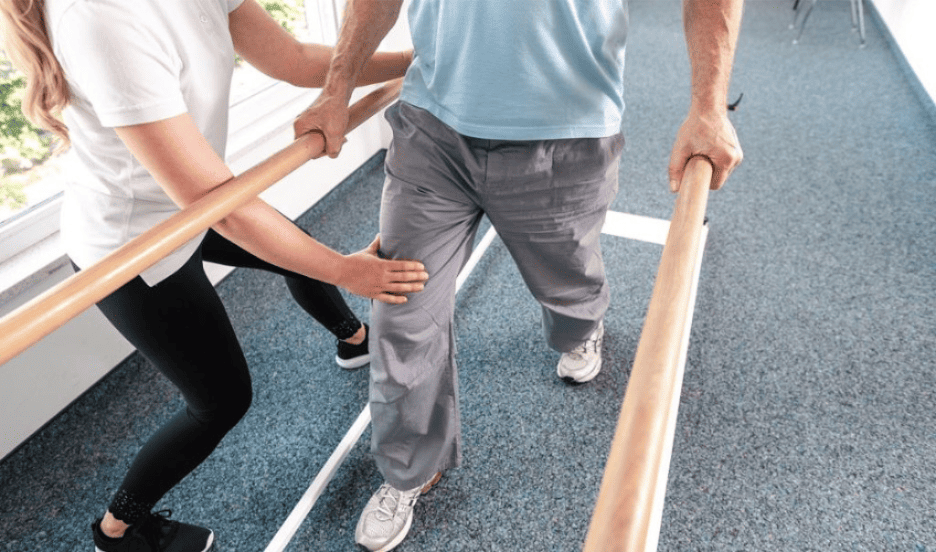
After a concussion, dizziness, unsteadiness, and difficulty walking can make ordinary activities feel unfamiliar. Turning the head, walking through a crowded space, looking at a moving object, or changing positions may bring on symptoms that were not present before the injury.
For people searching for concussion physical therapy, understanding why these symptoms occur is an important part of deciding what type of care may help. A concussion can affect the vestibular system, vision, sensory processing, coordination, and the brain’s ability to control movement. Physical therapy can assess these areas and use specific exercises to address balance and mobility problems.
For patients looking for balance therapy in the Chicago area, CNS Brain Center provides neurological rehabilitation for concussion-related dizziness, balance, and mobility problems. Vestibular therapy is available at the River Forest location.
Why Can a Concussion Cause Balance Problems?
Balance depends on information coming from several systems at the same time. The inner ear provides information about head movement and position. The eyes help the brain understand where the body is in relation to its surroundings. Muscles and joints provide information about body position. The brain processes these signals and uses them to coordinate movement.
A concussion can interfere with how these systems communicate.
This can result in balance problems after concussion, including:
- Dizziness
- Unsteadiness
- Difficulty walking
- Motion sensitivity
- Visual discomfort
- Poor coordination
- Difficulty changing direction
- Problems maintaining balance while standing
Dizziness after concussion can also occur when a person turns the head, moves quickly, looks up or down, or walks through a visually busy environment.
The vestibular system is particularly important because it helps the brain understand movement and maintain orientation. When vestibular information does not match what the eyes or body are reporting, a person may feel dizzy or unstable.
Recovery after concussion varies. Symptoms improve relatively quickly for many people, while others experience dizziness, headaches, visual symptoms, fatigue, cognitive difficulties, or balance problems that persist and require further evaluation.
Also Read: Spotting the Symptoms of a Concussion
What Does Neurological Physical Therapy Target After a Concussion?
Neurological physical therapy focuses on movement and physical function when neurological conditions or injuries affect the way a person moves.
Following a concussion, a physical therapist may assess:
- Balance
- Walking and gait
- Coordination
- Vestibular function
- Eye movement
- Head movement
- Visual-motor interaction
- Postural control
- Movement during everyday activities
This assessment helps identify which systems may be contributing to dizziness or instability.
For example, one patient may have difficulty walking while turning the head. Another may lose balance when visual information changes. A third may experience dizziness when moving from sitting to standing.
Neurological physical therapy for concussion may address these differences through balance training, gait activities, vestibular exercises, coordination work, and other movement-based activities.
This is also why physical therapy for balance problems after concussion is not simply a matter of repeating the same balance exercise at every visit. The therapist can adjust activities according to the patient’s symptoms, movement patterns, and ability to perform daily tasks.
Our neurological physical therapy program provides one-on-one care with licensed physical therapists. Treatment may include balance and dizziness therapy, vestibular rehabilitation, gait training, and concussion/TBI rehabilitation based on the patient’s needs.
How Does Vestibular Rehabilitation Help With Dizziness and Balance?
Vestibular rehabilitation after concussion addresses problems involving balance, dizziness, eye movement, and the body’s response to head movement.
The vestibular system includes structures in the inner ear and neural pathways that help the brain process information about head position and movement. After a concussion, problems with vestibular processing or its interaction with visual and other sensory information can contribute to dizziness and imbalance.
Not all post-concussion dizziness has the same cause. Head injuries can sometimes trigger benign paroxysmal positional vertigo (BPPV), which causes brief episodes of vertigo with certain head or position changes. When positional vertigo is suspected, the evaluation may include specific positional testing, and treatment can involve canalith-repositioning maneuvers rather than a standard vestibular exercise program.
Treatment may include several types of exercises.
Gaze-Stabilization Exercises
These exercises involve keeping the eyes focused on a target while the head moves. They can be used when head movement causes dizziness or visual difficulty.
Balance Exercises
Balance activities may involve standing, shifting weight, changing positions, or walking while completing another task. The level of difficulty can be adjusted as the patient’s abilities change.
Movement Exercises
Some patients may experience symptoms when turning, bending, looking up, or moving through different environments. Therapy can include controlled practice of these movements.
Walking and Gait Training
Walking activities may address turning, changes in speed, changes in direction, and coordination.
These exercises are selected to improve tolerance to movement and help patients practice balance, gaze control, and sensory integration during progressively challenging activities.
Patients often ask how to improve balance after a concussion. The answer depends on what is contributing to the balance problem. If vestibular dysfunction is present, vestibular exercises may be useful. If gait or coordination is contributing, treatment may focus more heavily on walking and motor control.
Also Read: The Science of Neuroplasticity: How Hyperbaric Oxygen Repairs the Brain
What Happens During a Balance Therapy Evaluation?
A balance therapy evaluation usually begins with a discussion of the concussion and the symptoms that followed.
The therapist may ask:
- When did the concussion occur?
- When did dizziness begin?
- Does head movement make symptoms worse?
- Is walking difficult?
- Do crowded environments cause discomfort?
- Are there problems with coordination?
- Have symptoms affected work, exercise, driving, or daily activities?
The physical examination may include balance testing, gait assessment, coordination tasks, eye and head movement assessment, and vestibular testing.
The therapist may observe how a patient walks, turns, changes positions, or maintains balance under different conditions.
This process helps determine which activities may be useful during rehabilitation.
A post-concussion physical therapy evaluation often goes well beyond traditional strength testing. It may assess balance, vestibular function, coordination, walking, visual-motor interaction, and how symptoms affect everyday movement.
CNS Brain Center’s concussion program combines neurological evaluation with rehabilitation services. Its current program describes physical therapy, particularly vestibular therapy, as part of care for dizziness, balance issues, and neck pain associated with post-concussive syndrome.
What Exercises May Be Used for Balance Problems After a Concussion?
There is no single exercise routine that applies to everyone recovering from a concussion.
A rehabilitation program may include standing balance exercises, walking activities, coordination exercises, gaze-stabilization work, and controlled head movements.
For example, a therapist may have a patient practice:
- Standing with different foot positions
- Shifting weight from side to side
- Walking while turning the head
- Changing direction while walking
- Looking between different targets
- Performing controlled eye and head movements
- Completing movement tasks while maintaining balance
When dizziness after a concussion has a vestibular component, vestibular exercises may be included in the treatment plan based on the evaluation findings.
Treatment for post-concussion dizziness and balance problems depends on what is driving the symptoms. Because dizziness can have several causes, the appropriate rehabilitation approach starts with an individualized evaluation.
Exercises may become more challenging as the patient’s ability to perform them improves. The therapist can also reduce or change an activity if it produces excessive symptoms.
The purpose is to practice movement in a controlled setting rather than forcing a patient through severe dizziness or instability.
How Long Does Concussion Physical Therapy Take?
There is no fixed treatment schedule for every person.
The length of rehabilitation can vary based on the symptoms involved, how long they have been present, previous concussions or other injuries, activity demands, response to treatment, and other health factors.
Some patients may need a relatively short course of rehabilitation. Others may require additional visits when dizziness, balance problems, gait changes, or other symptoms continue.
Consistency with prescribed exercises can also matter. Patients may receive activities to perform between appointments so that they can continue practicing the skills addressed during therapy.
Progress may be reflected in practical changes such as:
- Walking with greater confidence
- Turning the head with less dizziness
- Maintaining balance during daily activities
- Moving through busy environments more comfortably
- Returning to exercise or work-related activities
- Completing everyday tasks with fewer symptoms
New or worsening neurological symptoms after a head injury, such as increasing confusion, repeated vomiting, worsening severe headache, seizure, weakness or numbness, slurred speech, or loss of consciousness, require prompt medical evaluation rather than routine rehabilitation alone.
CNS Brain Center provides neurological evaluation and physical therapy as part of its concussion and TBI care, with rehabilitation coordinated alongside neurological treatment.
Also Read: Hyperbaric Oxygen Therapy for Post-Concussion Symptoms in Adults: New Evidence
Why Choose CNS Brain Center for Post-Concussion Rehabilitation?
CNS Brain Center’s neurophysical therapy program focuses on neurological conditions and includes gait, balance, vestibular rehabilitation, fall prevention, and concussion/TBI rehabilitation.
Our current concussion program also includes neurological evaluation, medical management, cognitive rehabilitation, and physical therapy. This allows treatment to address different symptoms that may occur after a concussion rather than focusing only on balance.
The physical therapy program provides one-on-one treatment with a licensed physical therapist, with rehabilitation coordinated alongside the neurological team.
Effective post-concussion rehabilitation begins by identifying which systems are contributing to the patient’s symptoms. Therapy can then target the movements, balance skills, vestibular responses, and functional activities that are most relevant to daily life.
Conclusion
A concussion can affect the systems responsible for balance, including the vestibular system, vision, sensory input, coordination, and movement control. When dizziness or unsteadiness continues after an injury, neurophysical therapy can assess these systems and use exercises directed at the specific problems identified during evaluation.
Patients experiencing dizziness after concussion, balance difficulties, or trouble returning to normal activities may benefit from a neurological and physical therapy evaluation. Treatment can then be based on the patient’s symptoms and physical findings rather than a standard exercise routine.
Experiencing dizziness, balance problems, or difficulty walking after a concussion? CNS Brain Center provides neurological evaluation and rehabilitation for post-concussion symptoms in the Chicago area, with vestibular therapy available at the River Forest location. Schedule an evaluation to learn what type of care may be appropriate for your symptoms.
FAQs
Can physical therapy help balance problems after a concussion?
Yes. Physical therapy can address balance, walking, coordination, vestibular function, and other physical problems that may occur after a concussion. The treatment approach depends on the patient’s symptoms and evaluation findings.
What is vestibular rehabilitation after a concussion?
Vestibular rehabilitation after concussion is a form of physical therapy that addresses dizziness, balance problems, eye movement, and difficulty processing information from the vestibular and visual systems.
What does concussion physical therapy involve?
Concussion physical therapy may include balance testing, gait assessment, coordination exercises, vestibular rehabilitation, gaze-stabilization exercises, and movement activities. Treatment depends on the patient’s symptoms and physical findings.
How long does post-concussion balance therapy take?
The treatment timeline varies from person to person. Factors such as symptom severity, how long symptoms have been present, activity level, and other medical conditions can affect the rehabilitation schedule.
Where can I get concussion rehabilitation in Chicago?
CNS Brain Center provides neurological care and rehabilitation for patients experiencing persistent symptoms after concussion in the Chicago area. Vestibular therapy is available at the River Forest location for patients experiencing dizziness and balance-related symptoms. Contact CNS Brain Center to confirm the appropriate location for your evaluation and treatment.