
Hyperbaric Oxygen Therapy (HBOT) in Chicago & River Forest
Chicago’s Only Certified Hard-Chamber Medical HBOT
Last Updated: October 8, 2026
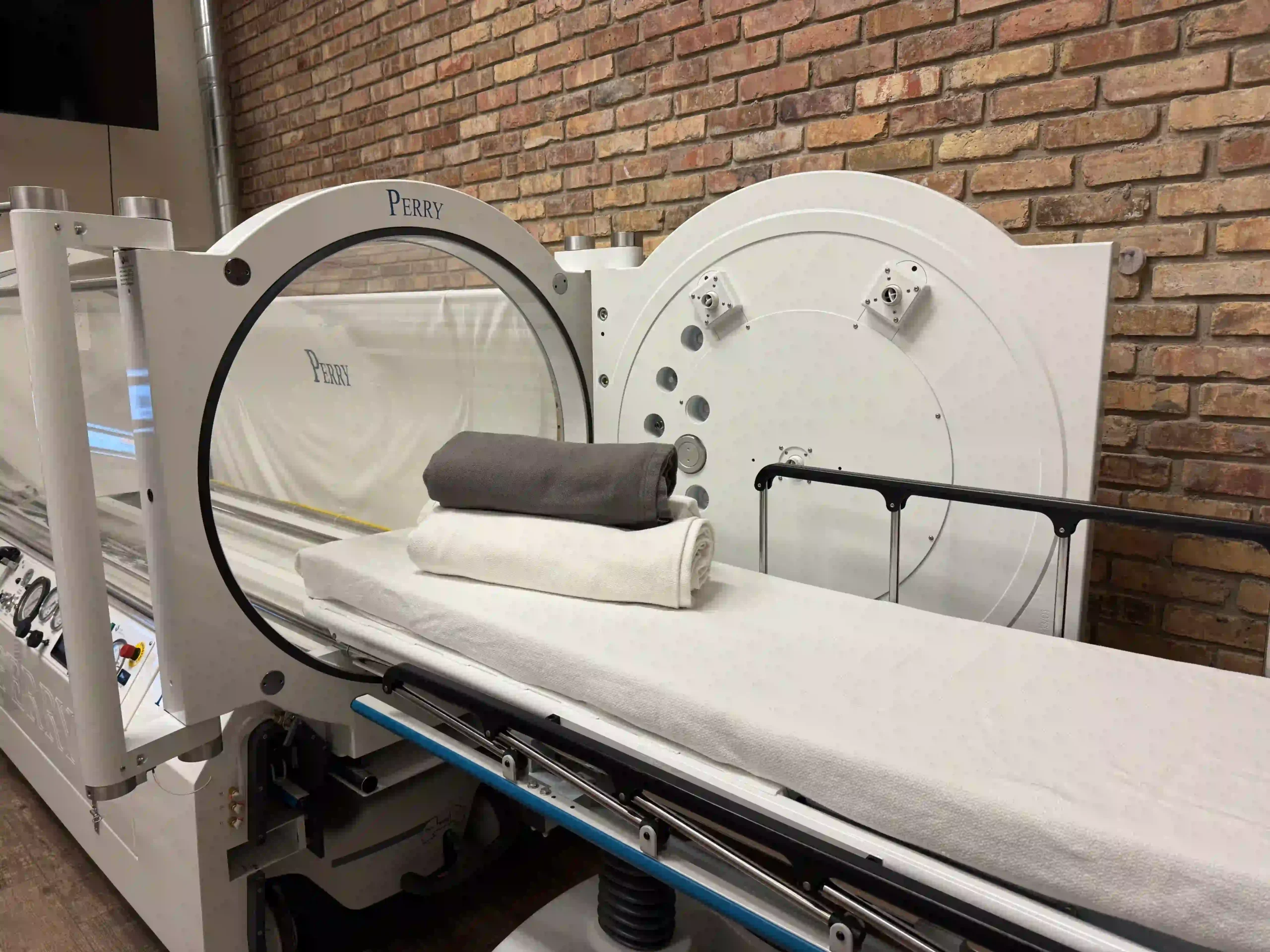
Expert Medical Hyperbaric Treatment at CNS Hyperbaric Center
Hyperbaric oxygen therapy (HBOT) in Chicago is a medical treatment that delivers 100% oxygen inside a pressurized, hard-sided chamber, increasing the amount of oxygen available to tissues throughout the body. At CNS Brain Center, treatment takes place in Perry Sigma 36 monoplace chambers within a physician-led medical hyperbaric program.
Our hyperbaric program is overseen by a board-certified neurologist based in Chicago, with treatment protocols selected according to each patient’s medical needs and reason for pursuing HBOT. CNS provides treatment for insurance-eligible medical indications as well as physician-supervised protocols for selected off-label applications. HBOT is available seven days a week, and our team helps patients determine insurance coverage when applicable.
What Is Hyperbaric Oxygen Therapy (HBOT)
During an HBOT session, you rest comfortably inside a clear, pressurized chamber and breathe 100% oxygen. The increased pressure allows oxygen to dissolve into the blood and tissues at higher concentrations than breathing air alone. This can help:
- Reduce inflammation and swelling
- Promote faster wound healing and tissue repair
- Stimulate new blood vessel growth (angiogenesis)
- Support brain function and neuroplasticity
- Support the body’s ability to fight certain infections
Under normal conditions, most oxygen travels through the body bound to red blood cells. Inside a hyperbaric chamber, the increased pressure dissolves extra oxygen directly into the blood plasma, the fluid that surrounds every cell. This lets oxygen reach tissue that a limited or damaged blood supply cannot fully serve.
Medical HBOT is delivered at pressures generally between 2.0 and 3.0 atmospheres absolute (ATA). At these pressures, the added dissolved oxygen supports several healing processes at once: it helps reduce swelling, supports the formation of new blood vessels (angiogenesis) as part of normal tissue healing, strengthens the body’s ability to fight certain infections, and helps mobilize the stem cells involved in tissue repair.
HBOT is most often used as part of a broader treatment plan rather than as a standalone cure. For FDA-cleared conditions, it works alongside wound care, surgery, antibiotics, or other therapies a physician recommends. As of the 2024 UHMS guidelines, there are 14 FDA-cleared and UHMS-recognized medical indications for HBOT.


Medical HBOT vs. Mild Hyperbaric: What Is the Difference?
Not all hyperbaric oxygen therapy is the same. The term HBOT is used for both medical-grade treatment and mild hyperbaric therapy, sometimes called mHBOT, but the two differ in pressure, the gas breathed, the equipment used, and the conditions they can address. Understanding the difference helps patients and referring physicians choose the right setting.
| Medical HBOT at CNS Brain Center | Mild Hyperbaric (mHBOT) | |
| Chamber type | Perry Sigma 36 hard-sided monoplace medical chamber | Typically soft-sided or inflatable |
| Pressure | Medical hyperbaric pressure based on the prescribed protocol | Typically lower pressure |
| Oxygen | 100% oxygen | Varies by system |
| Medical oversight | Board-certified neurologist based in Chicago | Varies by facility |
| Equipment maintenance | Annual manufacturer-led preventative maintenance and inspection | Varies by facility |
| Treatment planning | Physician-directed based on the patient’s indication and medical needs | Varies by facility |
| Insurance | May be covered for eligible medical indications | Generally not used for covered medical HBOT indications |
Mild hyperbaric therapy uses lower pressures than medical HBOT and may differ in how oxygen is delivered. It should not be considered equivalent to physician-directed medical HBOT used for established medical indications. At CNS Brain Center, patients breathe 100% oxygen in hard-sided medical chambers under physician oversight.
Not All Hard-Sided Hyperbaric Chambers Are the Same
Choosing a medical HBOT center involves more than asking whether it uses a hard-sided chamber. The equipment itself, how it is maintained, the oxygen delivered, the medical oversight, and the experience of the team all matter.
CNS Brain Center uses Perry Sigma 36 monoplace chambers designed for medical hyperbaric treatment. Patients breathe 100% oxygen during treatment, and the chambers undergo detailed annual manufacturer-led preventative maintenance and inspection. Regular manufacturer-directed servicing helps ensure the equipment continues to operate according to its specifications and required safety standards.
The program is also overseen by a board-certified neurologist based in Chicago. Treatment is approached as medical care rather than simply access to a hyperbaric chamber, allowing the patient’s health history, reason for treatment, and treatment goals to inform the protocol used.
CNS is the only medical center in downtown Chicago offering hospital-grade hyperbaric chambers.
What Should You Ask Before Choosing an HBOT Center?
Two centers may both advertise hard-chamber HBOT while providing very different treatment environments. Patients comparing hyperbaric centers should look beyond the chamber itself and understand how the program is operated.
What type of hyperbaric chamber does the center use?
Ask about the chamber manufacturer, whether the equipment is designed for medical HBOT, and the oxygen and pressure capabilities of the system.
How often are the chambers professionally maintained and inspected?
Ask how often preventative maintenance is performed, who services the equipment, and whether the chamber is maintained according to the manufacturer’s recommendations.
Who oversees the hyperbaric program?
Find out whether a physician is responsible for medical oversight and what experience or specialty that physician brings to the program.
Where is the supervising physician based, and how involved are they in the HBOT program?
Ask who is responsible for medical oversight, where that physician is based, and how directly they are involved in evaluating patients, developing treatment plans, and addressing clinical questions during care.
How long has the center provided HBOT in Chicago?
The chamber itself is only one part of the equation. Experience operating a medical hyperbaric program is also worth considering.
Does every patient receive the same HBOT protocol?
Ask how treatment pressure, session length, number of treatments, and treatment goals are determined. A medical program should consider why the patient is receiving HBOT rather than automatically applying the same protocol to everyone.
Does the center work with both insurance and self-pay patients?
Ask whether the center can help determine when HBOT may qualify for insurance coverage and how physician-supervised off-label treatment is handled.


Physician Referrals: Partnering With CNS for HBOT
CNS Brain Center welcomes referrals from primary care physicians and specialists across the Chicago area. Our hyperbaric program is overseen by a board-certified neurologist based in Chicago, allowing HBOT to be incorporated into a physician-directed treatment plan rather than delivered as an isolated chamber service.
Treatment planning considers the patient’s diagnosis, medical history, current care, and reason for pursuing HBOT. This allows the medical team to determine an appropriate protocol rather than applying the same treatment approach to every patient. When another physician is involved in the patient’s care, CNS can coordinate HBOT as part of the broader treatment plan.
● When to refer: chronic non-healing and diabetic wounds, delayed radiation tissue injury, refractory osteomyelitis, idiopathic sudden sensorineural hearing loss, and other FDA-cleared indications, as well as patients exploring physician-supervised off-label neurological recovery.
● What we handle: insurance verification for eligible conditions, on-site intake evaluation, treatment monitoring, and progress updates back to the referring provider.
● How to refer: visit https://cns-center.com/physician-referrals/ or call the Chicago office at 773-904-7101 or the River Forest office at 708-665-7000.
Physician-Led HBOT for Medical and Wellness Goals
Patients come to CNS Brain Center for different reasons. Some are referred for established medical indications for which HBOT may qualify for insurance coverage. Others are exploring physician-supervised off-label applications or HBOT as part of broader wellness, recovery, or performance goals.
Regardless of the reason for treatment, CNS approaches HBOT within a medical setting. Patients are evaluated individually, and treatment planning can account for medical history, treatment goals, and the reason HBOT is being considered rather than relying on a one-size-fits-all protocol.
As a neurological medical center, CNS also follows emerging research into hyperbaric medicine and neurological recovery. When an application remains off-label or investigational, that distinction should be discussed with the patient so the current evidence, potential limitations, treatment commitment, and cost can be considered before proceeding.

Hyperbaric Oxygen Therapy: Frequently Asked Questions
How do I know if I am a candidate for HBOT?
Candidacy begins with a medical evaluation. HBOT is well established for specific medical indications and may also be considered for selected off-label applications under physician supervision. During your evaluation, the CNS team reviews your medical history, current health, reason for pursuing HBOT, and treatment goals to determine whether hyperbaric therapy is appropriate for you.
What does a typical HBOT session feel like?
You rest comfortably inside a clear, hard-sided chamber while breathing 100% oxygen. As the pressure rises, you may feel a fullness in your ears similar to the sensation on an airplane, which eases with simple techniques the staff will show you. Many patients relax, watch a show, or nap during treatment while a team member stays nearby.
Are All Hard-Sided Hyperbaric Chambers the Same?
No. Hard-sided describes the chamber's construction, but hyperbaric systems can differ in their manufacturer, pressure capabilities, oxygen delivery, maintenance requirements, and intended clinical use. How the program is operated also matters. Patients should consider equipment maintenance, staff experience, physician oversight, and how treatment protocols are determined rather than choosing a center based on chamber type alone.
What Type of Hyperbaric Chambers Does CNS Brain Center Use?
CNS Brain Center uses Perry Sigma 36 monoplace hyperbaric chambers designed for medical HBOT. Patients breathe 100% oxygen during treatment, and the chambers undergo annual manufacturer-led preventative maintenance and inspection. CNS's hyperbaric program is overseen by a board-certified neurologist based in Chicago.
Is HBOT safe, and are there side effects?
When delivered in an appropriate medical setting and for properly selected patients, HBOT has a strong safety record. The most common side effect is temporary ear or sinus pressure as the chamber pressurizes. Less common effects can include temporary changes in near vision and, rarely, oxygen-related reactions, which the medical team monitors for throughout each session.
Are there any reasons someone should not have HBOT?
Some conditions call for caution or make HBOT unsafe, including an untreated collapsed lung and certain lung or ear conditions. A few medications can also affect eligibility. Because these factors are individual, a physician reviews your full medical history before clearing you for treatment.
Are All Hard-Sided Hyperbaric Chambers the Same?
No. Hard-sided describes the chamber's construction, but hyperbaric systems can differ in their manufacturer, pressure capabilities, oxygen delivery, maintenance requirements, and intended clinical use. How the program is operated also matters. Patients should consider equipment maintenance, staff experience, physician oversight, and how treatment protocols are determined rather than choosing a center based on chamber type alone.
Is HBOT appropriate for older adults or people with other health conditions?
Age alone does not rule out HBOT. Many older adults tolerate treatment well, and the therapy is often used to support healing in people managing chronic conditions. Your physician weighs any existing heart, lung, or ear conditions when deciding whether HBOT is a safe option for you.
How long is each HBOT session, and how many sessions will I need?
A typical HBOT session lasts about 90 minutes to two hours. The total number of sessions depends on your condition; many FDA-cleared wound and radiation protocols involve a series of daily treatments over several weeks. Your physician recommends a plan of care based on your diagnosis and your response to treatment.
Does insurance cover HBOT at CNS Brain Center?
Insurance may cover HBOT when it treats an FDA-cleared condition, such as a diabetic foot ulcer, delayed radiation injury, or refractory osteomyelitis. Coverage depends on your plan and on documentation of medical necessity. Our team verifies your benefits before treatment begins and helps coordinate approvals with your insurer.
How much does HBOT cost if I pay out of pocket?
Out-of-pocket cost depends on the condition being treated and the number of sessions in your plan of care. Off-label physician-supervised treatment plans are typically offered as cash-pay packages. Contact our team for current pricing and package options for your situation.
Do you offer cash-pay options for off-label conditions?
Yes. For conditions outside the FDA-cleared list, such as recovery support after concussion or stroke, CNS offers cash-pay packages. Because these uses are considered off-label, they are generally not covered by insurance. Our team can review options and pricing with you during your consultation.
Can HBOT help with diabetic or non-healing wounds?
Yes. Chronic non-healing wounds, including diabetic foot ulcers, are among the FDA-cleared uses of HBOT. By raising oxygen levels in poorly perfused tissue, HBOT can support wound healing and new blood vessel growth as part of a complete wound care plan. Treatment is coordinated with your wound care or primary care provider.
Is HBOT used after radiation therapy for cancer?
Yes. Delayed radiation injury, which can affect soft tissue and bone months or years after cancer treatment, is an FDA-cleared indication for HBOT. The therapy helps restore oxygen to damaged tissue and supports repair. This use is typically covered by insurance when medical necessity is documented.
Can HBOT help with stroke, TBI, or other neurological recovery?
HBOT is used off-label to support recovery after stroke, traumatic brain injury, and concussion, and this is an area of active research. Evidence continues to evolve. Because these uses are not FDA-cleared, they are offered as cash-pay treatment rather than through insurance. Our neurology-led team can discuss the current evidence and whether it fits your goals.