
For some patients, the most frustrating part of Long COVID isn’t fatigue or lingering physical symptoms. It’s the feeling that their mind isn’t working the way it used to. A familiar task takes twice as long. Details from a recent conversation are difficult to recall. By the end of a workday, concentrating on anything else feels nearly impossible.
These changes are often described as brain fog, a broad term for difficulties with memory, attention, mental clarity, and processing information. The symptoms can persist long after the initial infection, sometimes interfering with work and daily responsibilities for months.
As researchers learn more about the neurological effects of COVID-19, hyperbaric oxygen therapy (HBOT) has become an area of interest. Several clinical studies have examined whether treatment with oxygen under increased atmospheric pressure can improve cognitive function in patients with Long COVID.
At CNS Brain Center in Chicago, we provide medical-grade HBOT under the oversight of a board-certified neurologist. Patients considering this treatment should understand what the research has shown, where uncertainties remain, and what medical hyperbaric therapy involves.
Why Long COVID Brain Fog Can Be So Difficult to Manage
Memory problems are only one part of the picture. Some patients can recall information without difficulty but struggle to concentrate long enough to use it. Others notice that organizing tasks, following complicated conversations, or making decisions requires considerably more mental effort.
Symptoms may also change throughout the day. Concentration can be relatively good in the morning, then deteriorate after several hours of activity. For patients whose symptoms worsen after physical or mental exertion, trying to push through a demanding schedule may lead to a prolonged setback.
The causes of Long COVID-related cognitive symptoms are still being investigated. Researchers have examined persistent immune activity, inflammatory changes, blood vessel dysfunction, and disturbances in nervous system regulation. Poor sleep, headaches, medication effects, and other medical conditions can make these problems worse.
Because brain fog isn’t a specific diagnosis, identifying what contributes to a patient’s symptoms matters. Cognitive screening or a more detailed neurological evaluation may be useful when difficulties persist or begin affecting everyday function.
Also Read: 10 Things to Know About Medical Grade HBOT (And Why It’s Different)
What Has HBOT Research Found About Long COVID?
Hyperbaric oxygen therapy has an established place in medicine for selected conditions, including certain difficult-to-heal wounds and radiation-related tissue injuries. Its potential use for Long COVID is much newer.
During treatment, patients breathe 100% oxygen inside a pressurized chamber. The increased pressure allows more oxygen to dissolve into the blood plasma, making additional oxygen available to tissues.
Researchers are investigating whether these changes may influence inflammation, vascular function, and biological processes involved in neurological recovery. The interest isn’t based on the assumption that Long COVID brain fog is simply caused by low oxygen levels. Rather, scientists are studying how the body responds to repeated periods of increased oxygen exposure.
A Closer Look at the Clinical Evidence
A 2022 randomized, double-blind, sham-controlled trial studied 73 adults with persistent symptoms after COVID-19. Participants assigned to HBOT completed 40 sessions.
The researchers reported improvements in attention and executive functioning, along with other cognitive measures, compared with the sham-treatment group. Brain imaging findings also suggested changes associated with treatment.
A 2025 systematic review examined seven studies involving 199 participants. Across the included research, improvements were reported in selected measures of memory, attention, executive functioning, fatigue, and pain.
These findings are encouraging, particularly for patients whose cognitive symptoms have persisted despite other care. However, the studies involved relatively small groups, and treatment protocols differed. Other controlled trials have produced less consistent results.
HBOT is not currently FDA-approved specifically for Long COVID cognitive impairment. Larger studies are needed to establish how reliably it helps, which patients may benefit, and what treatment schedule is most appropriate.
Why the Type of Hyperbaric Chamber Matters
A medical hyperbaric chamber is more than an enclosed space that delivers oxygen. The equipment must maintain prescribed pressure, deliver oxygen appropriately, and operate within established safety procedures.
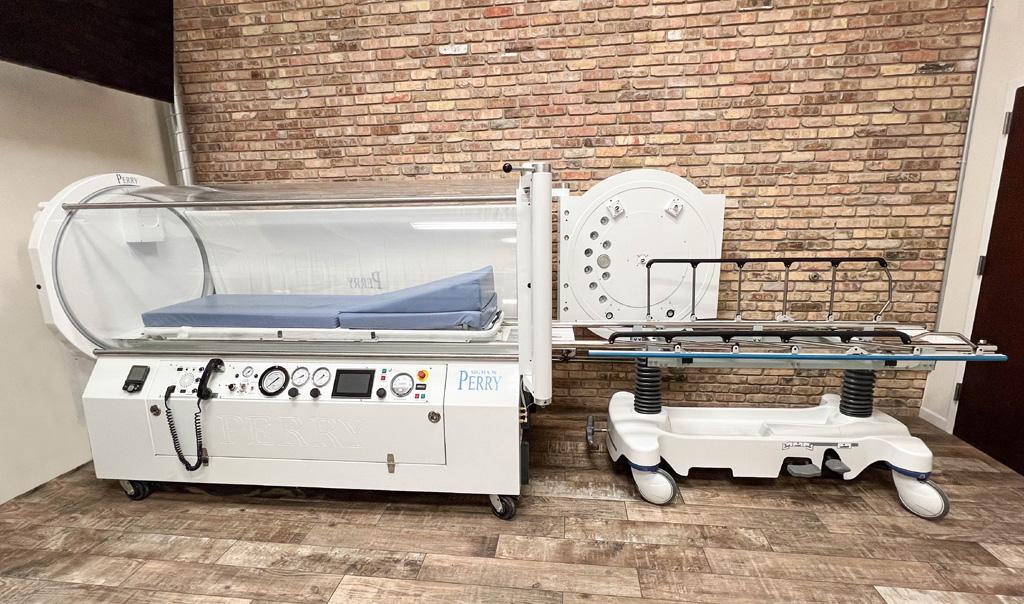
CNS Brain Center uses hospital-grade Perry Sigma 36 monoplace chambers at our Chicago facility. These hard-sided chambers are designed for medical hyperbaric treatment and deliver 100% oxygen under controlled pressure.
That distinction matters because some systems advertised for wellness or recovery operate at substantially lower pressures and may use different oxygen delivery methods. They shouldn’t be assumed to provide the same treatment used in clinical HBOT research.
Our hyperbaric program is overseen by a board-certified neurologist, with trained clinical personnel supporting treatment. The chambers undergo annual manufacturer maintenance and inspection.
What Patients Experience During Treatment
The Perry chambers accommodate one patient at a time and have transparent walls, allowing you to see outside during treatment. Television and streaming entertainment, including Netflix, Hulu, and YouTube, are available to help make the session more comfortable.
Once you’re inside, the chamber pressure increases gradually. You may feel fullness or popping in your ears, much like you would during an airplane flight. Our staff explains how to equalize that pressure and monitors the treatment.
You’ll breathe 100% oxygen while the chamber remains at the prescribed pressure. When the session is finished, pressure decreases gradually before you exit.
The pressure and duration used depend on the treatment protocol and medical considerations.
Also Read: What Conditions Are FDA-Approved for HBOT?
How Might HBOT Affect Neurological Function?
The brain depends on a continuous supply of oxygen, but researchers studying HBOT are interested in effects that extend beyond oxygen delivery during a session.
One proposed mechanism involves the response to changing oxygen levels. During HBOT, tissues are exposed to increased oxygen availability, known as hyperoxia. When oxygen levels return to normal afterward, certain cellular signaling pathways may respond to that change.
Researchers sometimes describe this as the hyperoxia-hypoxia paradox. Studies are examining its relationship to inflammation, blood vessel formation, and processes involved in tissue repair.
Neuroplasticity is another area of interest. This refers to the brain’s ability to adapt and reorganize neural connections, a process that may be relevant when neurological function has been affected by illness or injury.
These mechanisms help explain why HBOT is being investigated, but they don’t establish that treatment will reverse Long COVID brain fog. The clinical studies remain essential for determining whether the proposed biological effects produce meaningful, lasting improvements.
When Persistent Brain Fog Deserves Further Evaluation
Long COVID may explain when cognitive difficulties began, but other factors can influence how severe they become.
Sleep disturbances, headaches, medications, mood symptoms, and underlying medical conditions can all affect concentration and memory. A patient may be dealing with several of these problems at once.
A neurological evaluation can help clarify the pattern of symptoms. Depending on the findings, cognitive screening, neuropsychological testing, or other investigations may be appropriate.
Treatment may also involve cognitive rehabilitation, management of sleep problems, or strategies for handling fatigue. Patients who experience worsening symptoms after exertion may need an approach that respects those limitations rather than encouraging them to push through.
These considerations are important when discussing HBOT as well. Treatment decisions are more useful when they’re based on a complete understanding of the patient’s neurological health.
Medical Screening and HBOT Safety
HBOT is a medical procedure that requires appropriate screening. Changes in chamber pressure can cause ear or sinus discomfort and, occasionally, injury. Temporary vision changes and claustrophobia are also possible. Oxygen toxicity is uncommon but potentially serious, and an untreated pneumothorax is a major contraindication.
At CNS Brain Center, our clinical team reviews relevant medical history and explains treatment precautions before proceeding.
There is no established HBOT schedule for Long COVID brain fog. Although some studies have examined 40-session protocols, that research schedule isn’t a universal recommendation for patients with persistent cognitive symptoms.
Take the Next Step Toward Understanding Your Long COVID Brain Fog
If memory lapses, difficulty concentrating, or persistent mental fatigue are affecting your daily life, you don’t have to keep wondering what may be contributing to your symptoms.
Contact CNS Brain Center in Chicago to schedule a consultation. Our neurological team can review your concerns, discuss the latest research on HBOT for Long COVID, and help you determine whether further evaluation or medical-grade hyperbaric oxygen therapy may be appropriate.
Learn more about our hyperbaric oxygen therapy services and take the next step toward understanding your treatment options.
Also Read: Clearing the Cloud: How Hyperbaric Oxygen Therapy Helps Combat Brain Fog
Frequently Asked Questions
Can Hyperbaric Oxygen Therapy Improve Long COVID Brain Fog?
Some clinical studies have reported improvements in attention, memory, and executive functioning following HBOT. The findings are encouraging, although larger trials are needed to determine how consistently treatment benefits patients with Long COVID cognitive symptoms.
Why Am I Still Having Memory Problems Months After COVID-19?
Long COVID may involve persistent changes in immune activity, inflammation, blood vessel function, or nervous system regulation. Sleep problems, fatigue, and other medical conditions can also contribute. A neurological evaluation may help identify factors affecting your memory.
How Many HBOT Sessions Are Needed for Long COVID Cognitive Symptoms?
There is no established treatment schedule for Long COVID brain fog. Some clinical studies have used 40-session protocols, but researchers haven’t determined the optimal number of sessions or which patients are most likely to benefit.
How Is Medical-Grade HBOT Different From Mild Hyperbaric Therapy?
Medical-grade HBOT uses prescribed oxygen exposure under controlled pressure. CNS Brain Center uses hospital-grade Perry Sigma 36 monoplace chambers that deliver 100% oxygen. Mild hyperbaric systems generally operate at lower pressures and may use different oxygen delivery methods.
What Does an HBOT Session Feel Like?
You may notice fullness or popping in your ears as the chamber pressure changes. Most of the session is spent resting inside a transparent chamber while breathing 100% oxygen. At CNS Brain Center, television and streaming entertainment are available during treatment.
Where Can I Find Medical-Grade HBOT for Long COVID Brain Fog in Chicago?
CNS Brain Center offers physician-supervised, medical-grade hyperbaric oxygen therapy in Chicago. Contact our team to discuss your cognitive symptoms, learn about the treatment process, and schedule a consultation.