
If your doctor has recommended hyperbaric oxygen therapy, you may be wondering: what conditions are FDA-approved for HBOT? This is an important question because hyperbaric oxygen therapy is not a treatment that is automatically appropriate for every disease or symptom.
FDA-cleared hyperbaric chamber devices are labeled for use in specific medical conditions, including carbon monoxide poisoning, decompression sickness, air or gas embolism, selected wounds and infections, refractory osteomyelitis, delayed radiation injury, compromised grafts and flaps, and other serious conditions.
For patients researching HBOT Chicago options, CNS Brain Center provides physician-led medical hyperbaric oxygen therapy with individualized evaluations. The goal is to determine whether HBOT is medically appropriate for your particular condition, not simply whether your diagnosis appears on a general list of HBOT conditions.
What Does “FDA-Approved” Mean for HBOT?
Patients commonly search for FDA-approved HBOT, FDA-cleared HBOT, and hyperbaric oxygen indications when researching treatment. Technically, the more accurate terminology for HBOT equipment is generally FDA-cleared indications.
The FDA clearance identifies recognized uses for regulated medical hyperbaric equipment. It does not mean that every condition discussed online is an established indication, nor does it mean that every patient with a particular diagnosis automatically qualifies.
This distinction matters when researching hyperbaric oxygen therapy. FDA clearance, medical necessity, and insurance coverage are separate considerations. An FDA-cleared indication does not automatically guarantee that a patient’s insurance plan will reimburse treatment.
In practical terms, FDA clearance identifies recognized uses for the medical device, while the patient’s physician and insurance payer determine whether the treatment is appropriate and covered under the applicable requirements.
Also Read: Medical-Grade HBOT for Neurodegenerative Conditions
What Conditions Does Hyperbaric Oxygen Therapy Treat in Chicago?
When patients search for conditions treated with hyperbaric oxygen therapy in Chicago, they are often looking for a straightforward explanation of the recognized medical indications.
Emergency and Acute Conditions
Some acute conditions treated with HBOT include:
- Carbon monoxide poisoning
- Decompression sickness
- Gas or air embolism
- Certain acute traumatic ischemias
- Crush injuries
- Compartment syndrome-related ischemia
- Gas gangrene
These conditions can involve impaired oxygen delivery or significant tissue injury. In appropriate circumstances, HBOT treatment may be incorporated into the patient’s overall medical care
Infections
Recognized indications include certain serious infections, including:
- Necrotizing soft-tissue infections
- Refractory osteomyelitis
- Intracranial abscess
HBOT is generally used as an adjunct to conventional medical care rather than replacing appropriate antibiotics, surgery, drainage, or other standard treatments.
Wounds and Tissue Injuries
Certain wounds and tissue injuries may also be treated with HBOT, including:
- Selected problem wounds
- Compromised skin grafts and flaps
- Acute thermal burn injury
“Selected problem wounds” does not mean that HBOT is indicated for every chronic or slow-healing wound. Eligibility depends on the type and severity of the wound, prior treatment, clinical findings, and other applicable criteria.
The exact requirements can depend on the diagnosis, severity, treatment history, and applicable insurance criteria.
Radiation-Related Injuries
Hyperbaric oxygen indications include certain delayed radiation injuries involving soft tissue or bone. HBOT may be used as part of the treatment plan when radiation has caused chronic tissue damage and impaired healing.
HBOT may help support damaged tissue when oxygen delivery and healing capacity have been compromised following radiation treatment.
Other Recognized Indications
Certain cases of exceptional blood-loss anemia are also included among recognized indications for HBOT.
The presence of a diagnosis on a list of conditions treated with hyperbaric oxygen therapy does not, by itself, establish that HBOT is appropriate for every patient.
What Are the FDA-Cleared Conditions for Hyperbaric Oxygen Therapy?
When researching FDA-cleared conditions for hyperbaric oxygen therapy, it is important to understand that recognized indications cover specific clinical circumstances rather than broad categories of disease.
For example, a wound may qualify under particular circumstances, while another wound with a similar appearance may not. Likewise, an infection may require specific clinical characteristics before HBOT becomes an appropriate adjunctive therapy.
This is why FDA-cleared indications should be viewed as a starting point for evaluating treatment, not as a guarantee of eligibility.
Patients searching what is HBOT approved to treat should also understand that HBOT may be used as part of a broader medical treatment plan. Depending on the condition, conventional treatment may include wound care, surgery, antibiotics, vascular treatment, or other therapies.
Also Read: Clearing the Cloud: How Hyperbaric Oxygen Therapy Helps Combat Brain Fog
Does an FDA-cleared indication mean HBOT will be covered by insurance?
No. FDA device clearance and insurance coverage are separate considerations. Payer-specific medical-necessity, diagnosis, treatment-history, and documentation requirements may apply.
Insurance providers may have their own requirements regarding diagnosis, documentation, previous treatment, severity, and other clinical factors. Medicare and commercial insurance plans can have different coverage criteria.
For certain wound indications, documentation may be required to demonstrate that appropriate conventional treatment has already been attempted or that HBOT is being used alongside standard care.
Therefore, if you are asking who qualifies for hyperbaric oxygen therapy, the answer cannot be determined from a diagnosis alone. A physician must evaluate the individual patient.
Before starting treatment, patients should also confirm their insurance requirements and understand whether their particular diagnosis and circumstances meet the applicable coverage criteria.
How Does Hyperbaric Oxygen Therapy Work?
During HBOT, the patient breathes high-concentration oxygen inside a pressurized chamber. Increased atmospheric pressure allows more oxygen to dissolve into the plasma, increasing oxygen availability to tissues where delivery may be impaired.
The purpose of treatment is not simply to provide more oxygen. HBOT is a medical therapy used according to specific indications and protocols.
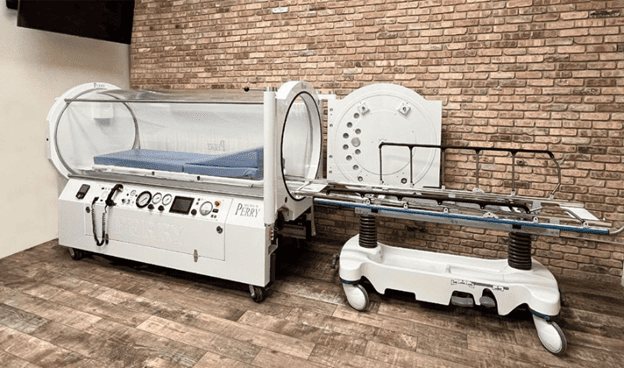
At CNS Brain Center, medical-grade HBOT chambers use pressurized oxygen under controlled treatment protocols. The chambers are made with transparent plexiglass, helping patients remain visually connected with their surroundings during treatment.
CNS Brain Center approaches HBOT as medical treatment rather than a general wellness service. This distinction is important for patients comparing medical hyperbaric care with non-medical oxygen services.
Some hyperbaric protocols also explore intermittent changes in oxygen exposure, sometimes discussed in connection with the hyperoxic-hypoxic paradox. Researchers have studied how these physiologic responses may relate to areas such as neuroplasticity and cognitive function. These areas of research should be distinguished from the FDA-cleared device indications discussed on this page.
Who Qualifies for Hyperbaric Oxygen Therapy?
Patients often search what diseases can be treated with HBOT or who qualifies for hyperbaric oxygen therapy after receiving a diagnosis. However, an online list cannot determine an individual’s candidacy.
A physician may consider:
- The specific diagnosis
- The severity and timing of the condition
- Previous and current treatments
- Relevant medical records
- Imaging
- Wound documentation, when applicable
- Specific medical-necessity requirements
Some indications have documentation requirements, and certain wound indications may require evidence that conventional treatment has already been attempted.
Patients should therefore undergo medical screening before beginning treatment. An individualized evaluation provides a more reliable answer than attempting to determine eligibility based on symptoms or an internet search.
What About Conditions That Are Not FDA-Cleared Indications?
Not every condition discussed in connection with HBOT is an FDA-cleared indication.
Researchers continue to study HBOT for various applications, but a condition being investigated does not automatically mean it is an established indication. Evidence for emerging applications can vary.
This distinction is especially important for patients researching conditions treated with hyperbaric oxygen therapy online. Marketing materials may discuss potential applications without clearly distinguishing established indications from investigational or off-label uses.
If your condition is not clearly recognized, consider asking:
- Is the hyperbaric chamber FDA-cleared for use for my condition?
- What evidence supports its use?
- Is the treatment medically necessary?
- Will my insurance cover it?
A responsible medical evaluation should make these distinctions clear.
Why Choose CNS Brain Center for HBOT in Chicago?
For patients searching for hyperbaric oxygen treatment in the Chicago area, CNS Brain Center provides physician-led medical HBOT with individualized evaluation and treatment planning.
CNS Brain Center uses medical-grade hyperbaric equipment and provides care in a medical setting rather than positioning HBOT as a general wellness treatment. Dedicated HBOT technicians and nurses support treatment, with physician oversight based in Chicago.
The Chicago location offers medical-grade HBOT. The River Forest location offers different services and should not be represented as an HBOT location.
Also Read: How Hyperbaric Oxygen Therapy Accelerates Healing for Brain Injury Patients
Conclusion: Understanding FDA-Approved HBOT
If you began your research by asking what conditions are FDA-approved for HBOT, the most important takeaway is that hyperbaric oxygen therapy has established medical indications, but not every condition associated with HBOT has the same regulatory or insurance status.
Recognized indications include carbon monoxide poisoning, decompression sickness, gas or air embolism, selected wounds and infections, refractory osteomyelitis, radiation-related injuries, compromised grafts and flaps, and other specific serious conditions.
FDA clearance does not automatically establish individual eligibility or insurance coverage. Your physician must evaluate your specific diagnosis and circumstances, and your insurance provider may impose additional medical-necessity and documentation requirements.
If you are considering HBOT, an individualized medical evaluation is the best way to determine whether treatment may be appropriate.
Wondering whether hyperbaric oxygen therapy may be appropriate for your condition? Contact CNS Brain Center to learn more about HBOT and schedule an individualized evaluation.
Frequently Asked Questions
What conditions are FDA-approved for HBOT?
The major recognized indications include carbon monoxide poisoning, decompression sickness, gas or air embolism, certain wounds and infections, radiation injuries, refractory osteomyelitis, and compromised grafts or flaps. Individual eligibility depends on the patient’s specific diagnosis and circumstances.
Does an FDA-cleared indication mean HBOT will be covered by insurance?
No. FDA device clearance and insurance coverage are separate considerations. Payer-specific medical-necessity, diagnosis, treatment-history, and documentation requirements may apply.
How long does hyperbaric oxygen therapy take?
Treatment duration and the number of sessions vary depending on the diagnosis, treatment protocol, and clinical response. There is no universal schedule for every patient.
Is hyperbaric oxygen therapy safe?
HBOT is a medical treatment that requires appropriate patient screening, equipment protocols, and monitoring. Potential risks can include ear or sinus pressure injuries, temporary vision changes, oxygen-related effects, and other complications. Because oxygen-rich hyperbaric environments also require strict fire-safety precautions, treatment should be performed with appropriate medical and equipment safety protocols.
How can I find out whether I qualify for HBOT in Chicago?
Qualification requires an individualized medical evaluation. Patients can contact CNS Brain Center to learn more about hyperbaric oxygen therapy and consultation options.