
Bladder or rectal problems after radiation therapy can be uncomfortable, disruptive, and concerning. Radiation used to treat cancers in the pelvis can sometimes damage nearby healthy tissue, and these effects may develop months or even years after treatment.
For appropriately selected patients, HBOT for radiation cystitis and radiation proctitis may be considered as part of treatment for delayed radiation tissue injury. Hyperbaric oxygen therapy has been studied for both bladder and rectal complications following pelvic radiation, with evidence supporting potential symptom improvement in selected patients.
If you are researching HBOT in Chicago, it is important to know that CNS Brain Center’s medical-grade HBOT services are offered at its Chicago location.
CNS Brain Center provides physician-led hyperbaric oxygen therapy using medical-grade chambers and individualized treatment planning.
What Are Radiation Cystitis and Radiation Proctitis?
Radiation cystitis is bladder injury associated with radiation treatment. Symptoms can occur during treatment, but delayed radiation cystitis may develop months or years later as radiation-related changes affect blood vessels and bladder tissue. HBOT is generally considered in the context of delayed radiation tissue injury rather than routine acute urinary symptoms during radiation therapy.
Common symptoms include:
- Blood in the urine
- Urinary frequency
- Urinary urgency
- Painful urination
- Pelvic discomfort
Radiation proctitis is radiation-related injury affecting the rectum. Acute symptoms can occur during or shortly after treatment, while delayed or chronic radiation injury may emerge months or years later. HBOT has primarily been studied as a treatment for late radiation tissue injury.
Symptoms may include:
- Rectal bleeding
- Rectal pain or discomfort
- Bowel urgency
- Diarrhea
- Changes in bowel habits
Both conditions can be manifestations of a broader pelvic radiation injury. Radiation can affect blood vessels and the tissue’s ability to receive oxygen and repair itself. Delayed radiation injury can therefore continue to cause symptoms long after cancer treatment has ended.
Because urinary or rectal symptoms can have causes unrelated to radiation, they should not automatically be attributed to previous cancer treatment. Appropriate evaluation is important before determining whether HBOT or another cystitis treatment or proctitis treatment is appropriate.
Also Read: Can Hyperbaric Oxygen Therapy Help Radiation Cystitis and Delayed Radiation Injury?
How Does HBOT Help Radiation Cystitis and Proctitis?
During HBOT, a patient breathes high-concentration oxygen inside a pressurized medical chamber. Increased atmospheric pressure allows more oxygen to dissolve into the plasma, increasing oxygen availability to tissues where circulation and oxygen delivery may have been impaired.
Radiation can damage small blood vessels and contribute to tissue hypoxia, fibrosis, and impaired healing. HBOT can increase oxygen availability and stimulate processes involved in tissue repair, including angiogenesis, or the formation of new blood vessels.
This mechanism is particularly relevant to hyperbaric oxygen therapy for radiation cystitis and hyperbaric oxygen therapy for radiation proctitis. By improving tissue oxygenation and supporting vascular repair, HBOT may help create conditions that are more favorable for healing.
How does HBOT treat radiation cystitis? In appropriately selected patients, HBOT increases oxygen availability in radiation-damaged bladder tissue and may stimulate new blood-vessel formation and tissue repair. Clinical studies have reported improvement in urinary symptoms following treatment.
How does hyperbaric oxygen therapy help radiation proctitis? The same general principle applies to radiation-damaged rectal tissue: increased oxygen availability may support vascular and tissue repair in areas affected by delayed radiation injury. Studies of patients with radiation cystitis and proctitis have reported symptom improvement, although outcomes vary.
HBOT is generally used as part of a broader medical treatment plan. It does not replace appropriate evaluation or treatment by urologists, gastroenterologists, oncologists, radiation oncologists, or other specialists.
HBOT for Radiation Cystitis vs. Radiation Proctitis
Although these conditions can have a common cause, they affect different organs.
Radiation cystitis affects the bladder and commonly produces urinary symptoms, particularly hematuria, urgency, frequency, and painful urination.
Radiation proctitis affects the rectum and more commonly produces rectal bleeding, urgency, pain, diarrhea, or other bowel changes.
Research has evaluated HBOT for both conditions. A prospective study of patients with late radiation-induced cystitis and proctitis reported symptom improvement following HBOT. More recent comparative evidence has also reported benefit for selected late radiation injuries involving the bladder and rectum, while emphasizing individualized treatment decisions.
For HBOT for radiation-induced bladder injury, the evaluation focuses on the patient’s urinary symptoms, radiation history, diagnostic findings, and previous treatments.
For HBOT for radiation-induced rectal injury, the evaluation focuses on bowel symptoms, rectal findings, radiation history, and prior treatment.
In either situation, a physician must determine whether the symptoms are consistent with delayed radiation injury and whether hyperbaric treatment is appropriate.
Also Read: How Hyperbaric Oxygen Therapy Accelerates Healing for Brain Injury Patients
When Is HBOT Recommended for Radiation Injury?
HBOT may be considered when a patient has documented or strongly suspected delayed radiation injury and the clinical circumstances support hyperbaric treatment.
Patients may have persistent or recurrent symptoms following radiation treatment. In some cases, symptoms may become apparent long after the original cancer treatment.
Before treatment, physicians may need to review:
- The type of cancer treated
- The location and extent of radiation
- When radiation therapy was completed
- The patient’s current symptoms
- Diagnostic testing
- Previous treatments
- Other medical conditions
The underlying cause of bleeding or inflammation must also be evaluated. For example, blood in the urine requires appropriate urologic assessment, while rectal bleeding may require gastroenterologic evaluation.
Depending on the situation, CNS Brain Center may coordinate care with urology, gastroenterology, oncology, radiation oncology, or other specialists involved in the patient’s care.
What to Expect During HBOT Treatment
Before treatment begins, a medical team evaluates your health history and the reason HBOT is being considered. Your radiation history, current symptoms, previous treatments, and relevant medical records may be reviewed.
During treatment, you enter a hyperbaric chamber and the pressure is gradually increased. You breathe high-concentration oxygen while the chamber remains at the prescribed pressure.
You may notice pressure or fullness in your ears during compression, similar to the sensation experienced during an airplane flight. The treatment team can provide instructions for equalizing ear pressure.
Treatment length and the number of sessions vary according to the patient’s diagnosis and treatment plan. Research protocols for radiation injury have often involved multiple treatments over several weeks. For example, the RICH-ART trial used 30–40 sessions for chronic radiation cystitis, but that should not be interpreted as a universal schedule.
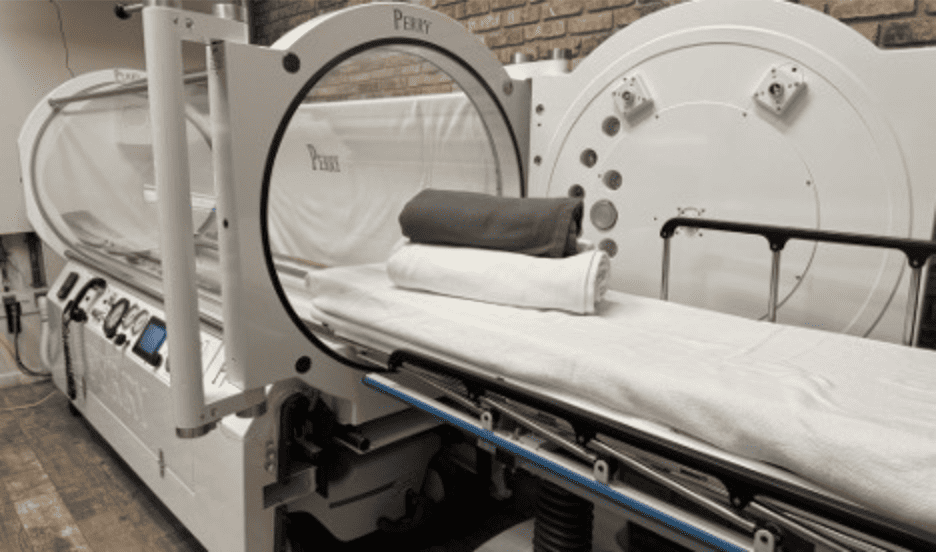
CNS Brain Center uses medical-grade hyperbaric chambers that allow treatment to be delivered at prescribed pressure under clinical supervision. The chambers are made with clear material that allows patients to see outside during treatment, which may help some patients who are concerned about feeling enclosed.
Is HBOT Effective for Radiation Cystitis and Proctitis?
Is HBOT effective for radiation-induced cystitis? Current evidence suggests that HBOT may provide meaningful symptom improvement for some patients with chronic radiation-induced cystitis. In the RICH-ART randomized controlled trial, patients with late radiation cystitis received 30–40 HBOT sessions, and the HBOT group experienced greater improvement in urinary symptoms than the standard-care group.
Longer-term follow-up of the RICH-ART study found that symptom improvement was maintained over five years among patients who responded to the initial treatment.
A systematic review of 20 studies involving 815 patients reported weighted average overall and complete response rates of 87.3% and 65.3%. However, the studies varied in design and quality, and the authors rated the overall evidence as low quality. These figures therefore should not be interpreted as an expected individual success rate.
Evidence also supports a potential benefit for radiation proctitis. The 2023 Cochrane review evaluated HBOT for late radiation tissue injury and included evidence involving both radiation proctitis and radiation cystitis. The authors found some evidence that HBOT may improve late radiation tissue injury, but characterized the certainty of much of the evidence as low.
More recently, a 2025 systematic review specifically evaluated comparative studies of HBOT for late radiation injury involving the bowel and bladder. The review included three randomized controlled trials involving 273 patients and found moderate-certainty evidence of benefit for rectal complications and cystitis.
Therefore, hyperbaric treatment for radiation damage should not be presented as a guaranteed cure. Research suggests that appropriately selected patients may experience meaningful improvement, but individual outcomes vary. HBOT should be incorporated into appropriate conventional medical care rather than used as a replacement for necessary urologic, gastroenterologic, oncologic, or other medical treatment.
Treatment for Chronic Radiation Cystitis and Proctitis
Patients searching for treatment for chronic radiation cystitis or treatment for chronic radiation proctitis should first receive an appropriate medical evaluation.
Treatment varies according to the organ involved, severity of symptoms, source of bleeding, and previous treatment. Depending on the condition, management may include medications, local therapies, endoscopic treatment, or other procedures directed by urology or gastroenterology.
HBOT may be considered when the patient’s symptoms and medical evaluation are consistent with delayed radiation tissue injury, and the patient is an appropriate candidate.
This is particularly important when bleeding is present. Hematuria or rectal bleeding should be evaluated to determine its cause and severity before attributing it to radiation.
Why Choose CNS Brain Center for HBOT?
For patients living in Chicago and surrounding suburbs, CNS Brain Center’s Chicago location provides access to its physician-led hyperbaric medicine program. The practice uses medical-grade hyperbaric equipment and provides individualized evaluation and treatment planning.
CNS Brain Center is a medical center rather than a medspa or chiropractic office. Its hyperbaric program includes dedicated HBOT technicians and nurses with physician oversight.
Patients considering HBOT for delayed radiation injury should receive an individualized assessment and, when appropriate, coordinate treatment with their existing medical specialists.
Also Read: The Science of Neuroplasticity: How Hyperbaric Oxygen Repairs the Brain
Conclusion
Radiation therapy can sometimes cause delayed injury to healthy tissues in the pelvis. When the bladder is affected, the result may be radiation cystitis. When the rectum is affected, it may be radiation proctitis.
For appropriately selected patients, HBOT may support healing by increasing oxygen availability to radiation-damaged tissue and stimulating processes involved in tissue repair. Current evidence supports potential benefit for selected late radiation injuries involving both the bladder and rectum, while emphasizing individualized treatment decisions.
Patients with persistent urinary bleeding, urinary urgency, rectal bleeding, bowel changes, pelvic pain, or other symptoms following radiation should seek appropriate medical evaluation. HBOT should complement, not replace, necessary urologic, gastroenterologic, oncologic, or other medical care.
Frequently Asked Questions
Can HBOT treat radiation cystitis?
It can be an option for appropriately selected patients with delayed radiation cystitis. Randomized clinical research has found improvement in urinary symptoms, and longer-term follow-up suggests that improvement may persist in many patients who initially respond.
Can HBOT help radiation proctitis?
HBOT may be considered for appropriately selected patients with delayed radiation proctitis. Research suggests potential benefit for some patients with late radiation injury involving the rectum, although treatment decisions should be individualized.
How many HBOT sessions are needed for radiation cystitis or proctitis?
There is no universal number of sessions. Treatment depends on the patient’s diagnosis, severity, medical history, treatment protocol, and response. Clinical research has used extended courses, including 30–40 sessions in a randomized trial of chronic radiation cystitis.
Is HBOT safe for radiation-induced bladder and rectal injuries?
HBOT is generally well tolerated when patients are appropriately screened and monitored, but it is not risk-free. Potential adverse effects include ear or sinus pressure and temporary vision changes, while more serious complications are less common. A medical evaluation helps identify conditions that may affect whether HBOT is appropriate.
Where Can I Get HBOT for Radiation Injury Near River Forest?
CNS Brain Center’s River Forest location offers a full spectrum of neurological testing, physical therapy, and IV infusion services. Because hyperbaric oxygen therapy requires specialized medical equipment and clinical oversight, HBOT is currently offered exclusively at the CNS Brain Center Chicago location.
River Forest is a nearby suburb located approximately 10 miles west of downtown Chicago, making the Chicago HBOT program accessible to patients from River Forest and surrounding communities. Patients interested in HBOT for delayed radiation injury can contact CNS Brain Center to discuss an evaluation and determine whether hyperbaric treatment may be appropriate for their condition.