
A diabetic foot ulcer may begin as a small blister, cut, or sore, but it can quickly become much more serious when healing slows or stops. Diabetes can affect circulation, nerve function, and the body’s natural repair process, making even minor wounds more difficult to heal. Without timely treatment, these wounds may progress to infection, hospitalization, or, in severe cases, amputation.
When standard wound care does not provide enough healing, medical-grade hyperbaric oxygen therapy (HBOT) may be recommended as part of an advanced treatment plan for eligible patients. Medical-grade HBOT delivers 100% oxygen in a pressurized chamber to increase oxygen delivery to damaged tissues and support the body’s natural healing response.
At CNS Brain Center, physician-directed care is supported by hospital-grade equipment, and the practice regularly collaborates with surgeons, wound specialists, and professional sports organizations while participating in clinical research involving hyperbaric medicine.
Why Some Diabetic Foot Ulcers Stop Healing
Several factors can work together to slow wound healing in people with diabetes.
Poor circulation limits the amount of oxygen reaching injured tissue. Since oxygen is necessary for tissue repair, wounds may remain open much longer than expected.
High blood sugar can interfere with normal healing by affecting immune function, collagen production, and tissue repair.
Peripheral neuropathy, or nerve damage, may reduce sensation in the feet. As a result, patients may not notice a blister, pressure injury, or developing infection until the wound has become much larger.
Infection and ongoing inflammation further slow healing while increasing tissue damage. When these issues occur together, they can create a cycle that turns a small wound into a chronic wound requiring advanced wound care.
Also Read: Medical-Grade Hyperbaric Oxygen Therapy Costs vs. ‘Wellness Chambers’ in Chicago
When Is a Diabetic Foot Ulcer Considered “Non-Healing”?
Not every diabetic foot ulcer requires HBOT. However, some wounds continue to show little or no progress despite appropriate treatment.
A diabetic wound may be considered non-healing when it fails to improve after several weeks of consistent wound care. Patients seeking medical-grade HBOT for non-healing diabetic foot ulcers in Chicago should be evaluated by a physician experienced in wound care and hyperbaric medicine. Signs that conventional treatment alone may not be enough include:
- Minimal reduction in wound size
- Recurrent infection
- Exposed deeper tissue or bone
- Delayed formation of healthy tissue
- Ongoing drainage or inflammation
Regular evaluation by a wound care professional helps determine whether additional therapies should be considered. Early referral to a specialized wound care and hyperbaric medicine program may improve the opportunity for healing before complications develop.
What Is Medical-Grade Hyperbaric Oxygen Therapy (HBOT)?
Hyperbaric oxygen therapy is a medical treatment performed inside a pressurized chamber where patients breathe 100% oxygen under physician supervision.
HBOT provided in a medical setting differs from wellness or spa oxygen chambers, which do not deliver the pressure levels or physician oversight required to treat FDA-approved medical conditions.
During treatment, increased atmospheric pressure allows oxygen to dissolve more efficiently into the bloodstream. This helps deliver oxygen to tissues with limited blood supply, including areas affected by chronic diabetic wounds.
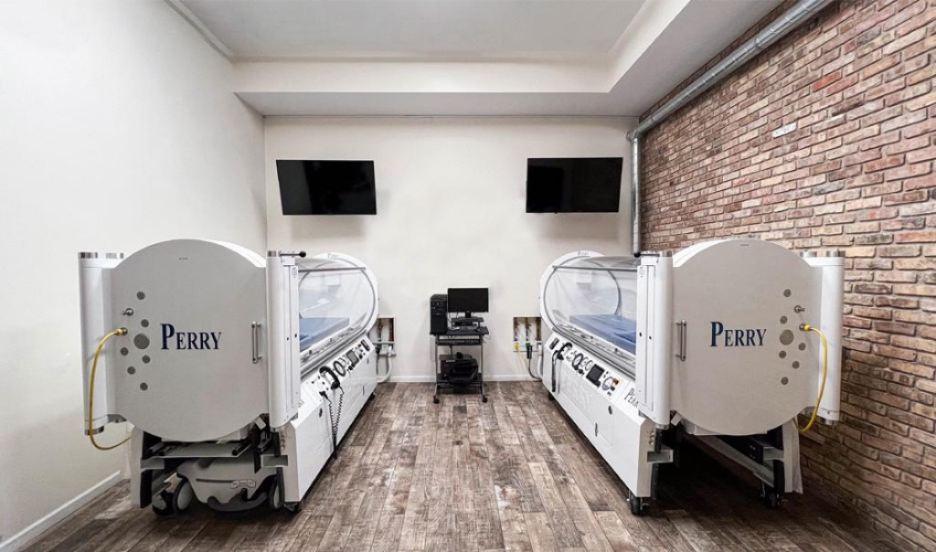
At CNS Brain Center, patients receive treatment in FDA-approved hospital-grade monoplace chambers that are the same type used in major hospitals. The chambers are constructed with clear plexiglass, measure approximately seven feet long and 36 inches wide, and are designed to provide a more comfortable experience for many patients who may otherwise feel confined. The center is also open seven days a week, and insurance coverage may be available for qualifying conditions.
How Medical-Grade HBOT Supports Healing in Diabetic Foot Ulcers
Medical-grade HBOT treatment for chronic diabetic wounds supports healing in several ways when combined with standard wound care.
First, it increases oxygen delivery to damaged tissue. Additional oxygen helps cells perform the work needed for tissue repair.
HBOT also supports angiogenesis, the formation of new blood vessels. Improved blood vessel growth may increase long-term oxygen delivery to healing tissues.
The treatment also supports collagen production, an important part of rebuilding skin and connective tissue.
In addition, oxygen-rich tissues allow certain immune cells to function more efficiently against bacteria, helping the body respond to infection.
Clinical studies suggest that, for carefully selected patients, medical-grade hyperbaric oxygen therapy for wound healing may improve wound closure rates and reduce the likelihood of major amputation when used alongside standard wound management.
Who May Be a Candidate for HBOT?
Not every diabetic foot ulcer requires hyperbaric treatment.
Patients who may benefit include those with:
- Diabetes and chronic foot ulcers
- Wounds that have not responded to standard wound care
- Certain deeper diabetic ulcers that meet medical criteria
- Evaluation by a physician experienced in hyperbaric medicine and wound care
Each patient receives an individualized assessment before treatment begins. The physician considers wound severity, circulation, infection status, medical history, and previous treatments before determining whether diabetic foot ulcer treatment with HBOT is appropriate.
HBOT Works Best as Part of a Comprehensive Wound Care Plan
HBOT is not a replacement for standard wound care. Instead, it is used alongside other treatments that address the underlying causes of poor healing.
A complete treatment plan may include:
- Regular wound assessments
- Debridement when appropriate
- Infection management
- Blood sugar management
- Offloading pressure from the affected foot
- Vascular evaluation when circulation problems are suspected
Combining these treatments with advanced wound care for diabetic foot ulcers may improve healing for eligible patients while reducing the risk of complications.
Also Read: Can Hyperbaric Oxygen Therapy Help Radiation Cystitis and Delayed Radiation Injury?
What Patients Can Expect During HBOT Treatment
Treatment begins with a physician evaluation and review of medical history to determine whether HBOT is appropriate.
During each session, the patient relaxes inside a pressurized chamber while breathing 100% oxygen. Sessions commonly last about 90 to 120 minutes, although treatment schedules vary based on the condition being treated.
The total number of sessions depends on wound severity and the patient’s response to treatment. Some patients require several weeks of therapy as part of their wound care program.
Throughout treatment, trained medical professionals monitor patient safety and comfort.
Benefits of Early Intervention
Seeking treatment before a wound becomes more severe may provide several advantages.
Earlier intervention may offer:
- Better opportunity for wound healing
- Lower risk of infection progression
- Reduced chance of hospitalization
- Greater potential to preserve limb function and mobility
- Improved quality of life
Prompt evaluation is particularly important for wounds that are not improving despite appropriate care.
Why Choose a Medical-Grade HBOT Program
Choosing a physician-directed medical-grade HBOT Chicago program means receiving treatment that follows established medical protocols for FDA-approved conditions.
CNS Brain Center patients benefit from:
- Physician-directed treatment plans
- FDA-approved hospital-grade hyperbaric chambers
- Clear plexiglass chambers designed for patient comfort
- Chambers measuring approximately seven feet long by 36 inches wide
- Availability seven days a week
- Insurance acceptance for qualifying conditions
- Coordinated care with referring physicians, surgeons, and wound care specialists
- Participation in clinical research involving hyperbaric medicine
- Chicago’s certified provider of hospital-grade monoplace HBOT services
Also Read: 10 Things to Know About Medical Grade HBOT (And Why It’s Different)
Conclusion
Non-healing diabetic foot ulcers require careful evaluation and coordinated wound management. When conventional treatment is not enough, hyperbaric oxygen therapy for non-healing wounds may provide additional support for eligible patients by increasing oxygen delivery and supporting the body’s healing process.
Medical-grade HBOT is most beneficial when combined with ongoing wound care, infection management, blood sugar control, and regular physician follow-up. Early evaluation may help reduce complications and improve the opportunity for healing before wounds become more severe.
Contact CNS Brain Center to schedule a wound evaluation and learn whether medical-grade HBOT may be appropriate for your condition.
FAQs
How does HBOT help diabetic foot ulcers?
HBOT delivers 100% oxygen under increased pressure, allowing more oxygen to reach damaged tissues. This supports tissue repair, new blood vessel formation, collagen production, and the body’s natural response to infection when used with standard wound care.
Is hyperbaric oxygen therapy effective for diabetic foot ulcers?
Research shows that selected patients with qualifying chronic diabetic foot ulcers may experience improved healing and a lower risk of major amputation when HBOT is added to standard wound care. Treatment recommendations depend on the wound’s severity and physician evaluation.
Who is a candidate for HBOT for diabetic wounds?
Candidates generally include patients with diabetes whose foot ulcers have not responded to standard wound care and who meet medical criteria after evaluation by a physician experienced in hyperbaric medicine.
Can HBOT heal non-healing diabetic foot ulcers?
HBOT can support healing for qualifying non-healing diabetic foot ulcers, but it is intended to complement, not replace, treatments such as wound cleaning, infection management, pressure offloading, and blood sugar control. Results vary depending on each patient’s overall health and wound condition.