
Neurodegenerative conditions gradually affect the brain’s ability to function by damaging nerve cells over time. Many of these disorders are associated with chronic inflammation, declining mitochondrial function, reduced blood flow, impaired oxygen utilization, and progressive loss of healthy neurons. As these changes continue, patients may experience worsening memory, movement, balance, speech, or cognitive function.
Medical-grade Hyperbaric Oxygen Therapy (HBOT) has emerged as an adjunctive therapy that may support brain health by increasing oxygen delivery to brain tissue and promoting neuroplasticity. While hyperbaric oxygen therapy is not a cure for neurodegenerative diseases, it may complement a comprehensive neurological treatment plan when provided under physician supervision.
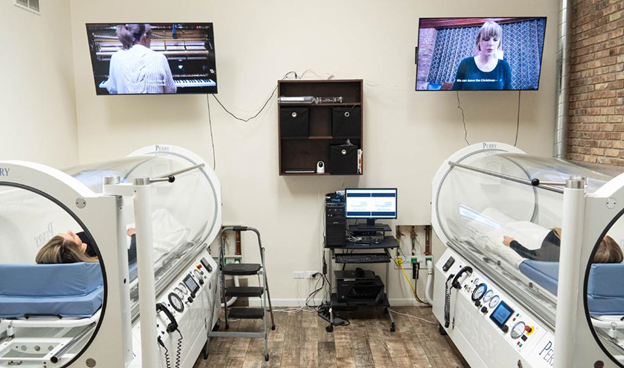
At CNS Brain Center, medical-grade HBOT Chicago patients receive is delivered in certified hard-shell hyperbaric chambers using 100% medical oxygen under the direction of experienced neurological providers. We integrate hyperbaric oxygen treatment with broader care for patients living with neurological conditions. Our medical-grade chambers are approximately seven feet long and 36 inches wide, making them among the largest available, and treatment is provided seven days a week under physician oversight.
How Neurodegenerative Conditions Affect Brain Function Over Time
Many neurodegenerative disorders develop through several overlapping biological processes that slowly interfere with normal brain function.
Chronic Neuroinflammation and Oxidative Stress
Inflammation plays a significant role in diseases such as Alzheimer’s disease, Parkinson’s disease, and multiple sclerosis. Ongoing inflammatory activity may contribute to damage within brain tissue while increasing oxidative stress, placing additional strain on healthy nerve cells.
Declining Mitochondrial Function and Reduced Oxygen Utilization
Mitochondria produce the energy required for neurons to communicate and function. As mitochondrial performance declines, nerve cells generate less ATP, making it harder for the brain to maintain normal activity. Reduced oxygen utilization further limits cellular energy production, leaving vulnerable brain tissue with fewer resources to repair itself.
Impaired Circulation Can Contribute to Cognitive and Motor Symptoms
Changes in cerebral blood flow may decrease the amount of oxygen and nutrients reaching vulnerable areas of the brain. This may contribute to problems with memory, attention, processing speed, balance, coordination, movement, and other neurological functions.
Neurologists commonly manage progressive disorders that may involve these mechanisms, including:
- Alzheimer’s disease
- Parkinson’s disease
- Multiple sclerosis
- Other progressive neurological conditions
Because these disorders involve multiple biological processes, treatment often combines medication, rehabilitation, lifestyle interventions, and supportive therapies designed to promote neurological rehabilitation and preserve quality of life.
Also Read: How Medical-Grade HBOT Supports Concussion Recovery
Why Oxygen Delivery Matters in Neurodegenerative Disease
Although the brain accounts for only about 2% of total body weight, it consumes approximately 20% of the body’s oxygen supply. Even modest reductions in oxygen availability can affect cellular metabolism, nerve signaling, and the brain’s ability to repair itself.
Unlike breathing oxygen under normal atmospheric conditions, hyperbaric oxygen treatment increases atmospheric pressure while patients breathe 100% medical oxygen. This allows substantially more oxygen to dissolve directly into blood plasma instead of relying primarily on red blood cells for transport. The dissolved oxygen can then reach tissues throughout the body, including areas where circulation may be compromised.
Greater oxygen availability may support:
- Cellular metabolism
- ATP production
- Tissue repair
- Neuroplasticity
- Reduced inflammation
One proposed mechanism behind HBOT for cognitive function is the hyperoxia-hypoxia paradox (HHP). During treatment, patients breathe 100% oxygen under increased pressure and then return to normal oxygen levels after the session. Although oxygen levels never become truly low, this transition can activate cellular pathways that normally respond to hypoxia. Researchers believe this response may stimulate angiogenesis, improve mitochondrial function, activate stem cells, promote neuroplasticity, and support cognitive performance. Emerging research suggests these adaptive responses may contribute to improvements in attention, memory, and other cognitive functions in appropriately selected patients, although further studies are needed to better define which patient populations benefit most. These biological effects continue to be studied for their potential role in hyperbaric oxygen therapy for brain health, neurodegenerative diseases, and cognitive decline.
Studies have also shown that increased oxygen availability may support the formation of new blood vessels, improve oxygen delivery to metabolically active tissues, and create conditions that help the brain adapt through the development of new neural connections. While research is ongoing, these mechanisms have generated growing interest in hyperbaric oxygen therapy for neurological conditions as part of physician-directed neurological care.
Why Medical-Grade HBOT Is Different From Wellness Oxygen Chambers
Not every chamber marketed for oxygen therapy produces the same physiological effects.
Medical-grade HBOT uses rigid, hard-shell chambers capable of reaching treatment pressures between approximately 2.0 and 3.0 ATA. These pressure levels allow therapeutic amounts of oxygen to dissolve into plasma and other body fluids. In contrast, many wellness or soft-shell chambers operate around 1.3 ATA and cannot achieve the same oxygen delivery demonstrated in neurological research.
Another important difference is the level of control available during treatment. Medical-grade hyperbaric chambers allow physicians to precisely control treatment pressure, oxygen concentration, and session duration. This level of control is particularly important because different neurological conditions and treatment objectives may require different protocols. Soft wellness chambers operate at lower pressures and do not provide the same degree of control or therapeutic oxygen delivery used in published medical research.
Medical-grade treatment also includes:
- 100% medical oxygen
- Physician-supervised treatment
- Individualized treatment protocols
- Continuous patient monitoring
- Evidence-based neurological applications
These differences matter because neurological treatment protocols require controlled pressure, careful patient selection, and ongoing medical oversight throughout therapy.
CNS Brain Center emphasizes true medical-grade HBOT Chicago patients can access rather than wellness-focused oxygen therapy. Our center features Chicago’s only certified non-hospital-based medical hyperbaric facility and uses spacious hard-shell plexiglass chambers that are approximately seven feet long and 36 inches wide. These chambers allow patients to remain comfortable while receiving physician-directed treatment. The physician-led program operates seven days a week and has treated thousands of patients using medical-grade hyperbaric oxygen therapy as part of comprehensive neurological care.
Also Read: Medical-Grade HBOT for Non-Healing Diabetic Foot Ulcers
How Medical-Grade HBOT May Support Patients With Neurodegenerative Conditions
Research into HBOT for neurodegenerative diseases continues to expand as scientists study how increased oxygen availability may influence the biological processes involved in neurological decline. While hyperbaric oxygen therapy is not intended to reverse progressive neurological disorders, it may help support several mechanisms associated with brain repair and function when incorporated into a physician-directed treatment plan.
Reduced Neuroinflammation
Chronic inflammation is a common feature of many neurodegenerative disorders. Inflammatory chemicals released within the brain can contribute to ongoing injury to neurons and surrounding tissues.
Studies suggest HBOT may help regulate inflammatory responses by influencing cellular signaling pathways involved in inflammation. Reducing neuroinflammation may help preserve healthy brain tissue and create a more favorable environment for neurological recovery and rehabilitation.
Improved Mitochondrial Function
Neurons depend heavily on mitochondria to generate ATP, the energy required for communication, memory formation, movement, and other neurological functions.
By increasing oxygen delivery to tissues, hyperbaric oxygen therapy may support mitochondrial activity and improve ATP production. Better cellular energy production may help nerve cells perform more efficiently despite the challenges associated with progressive neurological disease.
Enhanced Neuroplasticity
Neuroplasticity is the brain’s ability to reorganize existing neural pathways and develop new connections. This process plays an important role in learning, memory, and recovery following neurological injury.
Research suggests oxygen-rich environments created during hyperbaric oxygen therapy for neurological conditions may stimulate growth factors and cellular pathways involved in neuroplasticity. Combined with neurological rehabilitation, these changes may help the brain adapt by strengthening existing neural networks and supporting the development of new connections.
Increased Angiogenesis
Angiogenesis is the formation of new blood vessels. Greater vascular density may improve long-term oxygen and nutrient delivery throughout brain tissue.
One of the proposed effects of medical-grade hyperbaric oxygen therapy benefits is the stimulation of angiogenesis through mechanisms associated with the hyperoxia-hypoxia paradox. New blood vessel formation may improve circulation within areas of the brain that have experienced reduced oxygen availability.
Support for Overall Brain Health
Medical-grade HBOT is designed to create biological conditions that support healing rather than directly treating the underlying neurological disease.
For appropriately selected patients, hyperbaric oxygen therapy for brain health may help support:
- Healthy oxygen delivery to brain tissue
- Cellular energy production
- Neuroplasticity
- Angiogenesis
- Reduced neuroinflammation
- Ongoing neurological rehabilitation
Responses vary between individuals, and expected outcomes depend on the underlying neurological condition, disease progression, and the overall treatment plan.
Which Patients May Benefit From a Neurological HBOT Evaluation?
Not every patient with a neurological diagnosis is an appropriate candidate for hyperbaric oxygen therapy. A comprehensive neurological evaluation helps determine whether treatment may fit within an individual’s overall care plan.
Patients who may benefit from an evaluation include:
- Individuals experiencing early cognitive decline.
- Patients diagnosed with Parkinson’s disease.
- Patients living with multiple sclerosis.
- Individuals with neurodegenerative disorders seeking supportive therapies.
- Patients interested in physician-guided brain health optimization.
- Individuals looking for medical-grade HBOT for neurodegenerative conditions in Chicago as part of multidisciplinary neurological care.
During the evaluation, physicians review medical history, neurological findings, imaging studies, current treatments, and overall health before determining whether hyperbaric oxygen therapy for neurological conditions is appropriate.
Because every neurological condition presents differently, candidacy should always be determined through a physician-led neurological assessment rather than self-referral based on online information alone.
Why Physician Oversight Is Essential for HBOT
Hyperbaric treatment protocols are not identical for every neurological diagnosis. Pressure levels, treatment duration, session frequency, and the total number of treatments may vary depending on the patient’s diagnosis, medical history, current symptoms, and response to therapy.
Medical-grade treatment requires careful supervision because physicians must determine the appropriate protocol while monitoring patients throughout therapy. This level of oversight helps provide a safe treatment environment and allows adjustments when clinically appropriate.
Before beginning treatment, patients at CNS Brain Center undergo a comprehensive neurological evaluation to determine whether HBOT for neurological rehabilitation fits within their broader treatment strategy.
CNS Brain Center’s physician-led program combines neurological expertise with certified medical-grade hyperbaric technology. Treatment is delivered in hospital-grade hard-shell chambers using individualized protocols developed for neurological applications. Continuous monitoring throughout every session allows the care team to supervise treatment while adjusting protocols as needed.
CNS Brain Center operates Chicago’s only certified non-hospital-based medical hyperbaric facility. Our center has more than a decade of experience providing medical-grade hyperbaric oxygen therapy and has treated thousands of patients with neurological and other medically appropriate conditions. Its physician-directed approach integrates hyperbaric oxygen treatment with comprehensive neurological care rather than offering HBOT as a standalone service.
Also Read: Medical-Grade Hyperbaric Oxygen Therapy Costs vs. ‘Wellness Chambers’ in Chicago
Conclusion
Neurodegenerative diseases involve complex biological changes that affect oxygen utilization, inflammation, circulation, mitochondrial function, and nerve cell survival. Although no single therapy can stop every aspect of disease progression, supportive treatments may help improve the environment in which the brain functions.
Medical-grade HBOT Chicago patients receive at CNS Brain Center may support brain health by increasing oxygen delivery, promoting neuroplasticity, supporting mitochondrial function, stimulating angiogenesis, and helping regulate neuroinflammation. The ability of medical-grade chambers to deliver physician-controlled pressure and oxygen levels distinguishes them from wellness chambers and allows treatment protocols based on established medical standards.
While hyperbaric oxygen therapy is not a cure for neurodegenerative diseases, it may serve as a valuable addition to a personalized neurological treatment strategy. A physician-guided evaluation can determine whether HBOT for neurodegenerative diseases, hyperbaric oxygen therapy for cognitive decline, or HBOT for neurological rehabilitation may be appropriate based on an individual’s diagnosis, medical history, and treatment plan.
We encourage you to schedule a neurological consultation at CNS Brain Center to determine whether medical-grade Hyperbaric Oxygen Therapy may be appropriate for you.